Vowles Wants a Catch-Up Allowance. The Big Four Would Rather He Didn’t
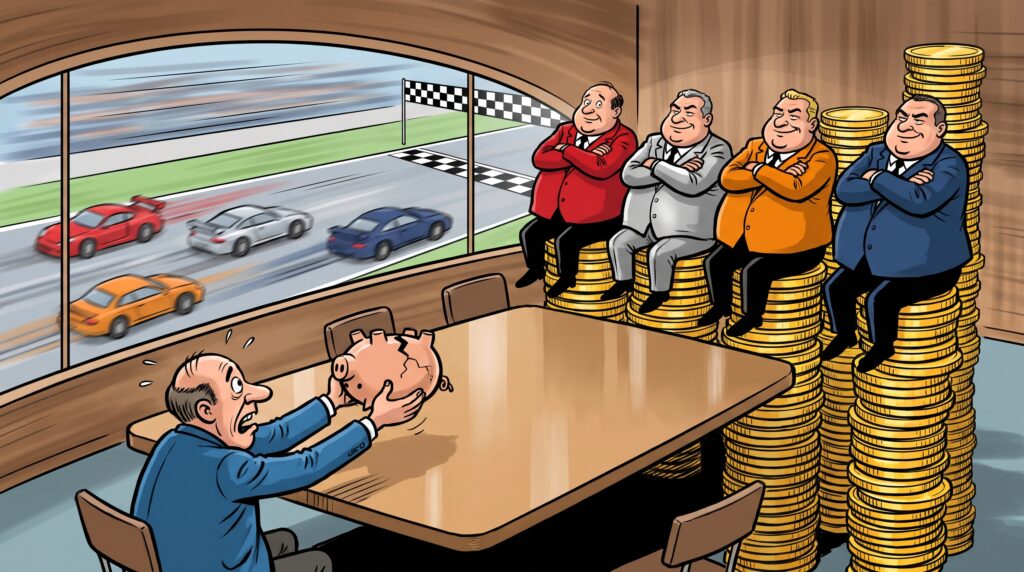
Illustration: AI-generated (Google Gemini). Invented characters, not real people.
On Monday the F1 Commission will debate whether teams at the back should be allowed to spend more than teams at the front. You can guess how the teams at the front feel about it.
The idea
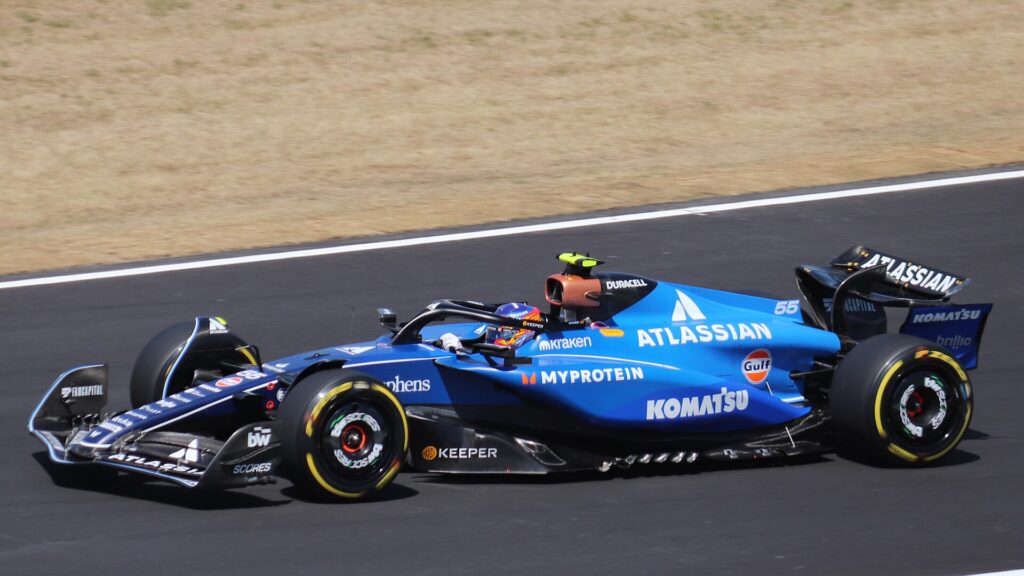
The proposal comes from Williams boss James Vowles and has picked up the nickname “ADUO for teams”, after the catch-up mechanism that already exists for struggling engine manufacturers. His argument: the cost cap has made every team financially stable, but it has also frozen in place the advantages of the outfits that spent heavily on factories and tools before the cap arrived in 2021. Williams has been pouring its allowance into fixing old infrastructure, which leaves less for the actual car. Vowles calls it a cost cap trap.
His fix is a sliding scale. Finish lower in the constructors’ championship and you get more room to spend.
The maths of the vote
To get it into the rules for 2027, Vowles needs the FIA, Formula 1 and six of the eleven teams. According to The Race, he has Cadillac, Alpine, Aston Martin and Audi alongside Williams. That is five. Haas is not interested because it does not spend up to the cap anyway, and Racing Bulls is holding out too. The top four have nothing to gain from funding their own pursuers.
There is a consolation prize. Four supporting teams is reportedly enough to keep the idea alive for 2028, so this argument is not going away on Monday whatever happens.
The other fight
The same meeting is expected to drift into staff pay. The cap rises with inflation, and teams say that leaves them unable to lift salaries enough to keep engineers during a cost-of-living squeeze. That one worries the big teams as much as the small ones, which is why it might actually move.
Where the name comes from
ADUO stands for Additional Development and Upgrade Opportunities. It is the mechanism in the new engine rules that gives a manufacturer who has fallen behind extra room to catch up, and the FIA reviewed how it is working only this month. Vowles’s pitch is that the same logic should apply to the teams themselves: if the sport accepts that a struggling engine maker needs help, it can accept that a struggling chassis maker does too.
He says he has the FIA and Formula 1 on his side, which matters because both have a vote. What he does not yet have is the sixth team.
Why the front of the grid is relaxed
This season has been unusually kind to the top four. Red Bull’s Laurent Mekies said this week that the leading teams have converged faster than anyone expected under the new rules, to the point where any of four could win on a given weekend. From where they sit, the system is working beautifully. From tenth place it looks like a private members’ club with a spending limit on the door.
The pay argument is the one that could shift things. Teams have previously discussed taking a larger group of staff outside the cap, with a figure of up to 300 people floated, and backed away because it would have gutted the cap altogether. A narrower version is back on the table because every team, rich or poor, is losing engineers to better-paid jobs elsewhere.
Our read
Vowles has a point, and awkward timing. He admitted to Sky this week that Williams got carried away with last year’s success, and called a poor 2026 a blip. A team boss asking for a spending handicap in the same week he describes his season as a blip is handing his opponents their best line. Still, the principle already exists for engines. If F1 thinks catch-up help is fair for a power unit, it owes an explanation of why it is unfair for a wind tunnel.
Reported by The Race, GPFans and Sky Sports.
Start the argument
Be decent. A first comment is checked before it appears.